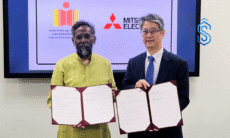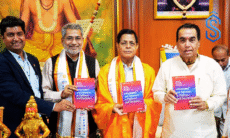

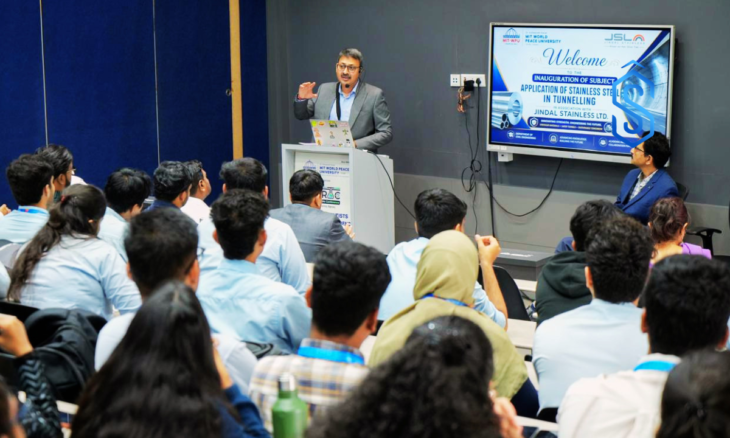
Pune: Jindal Stainless, India’s leading stainless steel manufacturer, has signed a Memorandum of Understanding (MoU) with MIT World Peace University (MIT-WPU), Pune, to launch a specialised course on stainless steel applications in tunnel and underground space construction.
Titled ‘Stainless Steel: A Sustainable, Green & Innovative Material for Tunnel and Underground Space Construction,’ the programme aims to strengthen industry-academia collaboration by equipping future engineers with practical knowledge of stainless steel, advanced materials and their applications in sustainable tunnel construction.
The first batch of the course will commence today.
Jindal Stainless and MIT-WPU to Focus on Sustainable Tunnel Engineering
The collaboration comes as India witnesses significant investments in metro rail, highways, railways, hydropower and Pumped Storage Projects (PSPs), making underground infrastructure an increasingly important component of future development.
As tunnels are designed for longer service lives and operate in challenging environments involving groundwater, humidity and corrosive conditions, the need for engineers with expertise in advanced materials, lifecycle-based design and sustainable construction practices is growing.
Through the programme, Jindal Stainless and MIT-WPU will provide students with practical insights into stainless steel applications, corrosion resistance and lifecycle-based material selection for tunnel engineering.
MoU Signed by Jindal Stainless and MIT-WPU Officials
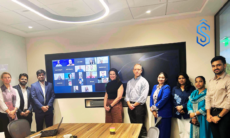
The MoU was signed by Chief Executive Officer, Jindal Stainless, Mr Tarun Khulbe; Chief of Business Unit, Jindal Stainless Steelway Ltd., Mr Madhur Gupta; and Head – Strategic Business & Tunnel Infra, Jindal Stainless Steelway Ltd., Mr Sandeep Singh.
Representing MIT World Peace University (MIT-WPU), the MoU was signed by Dean, Faculty of Engineering & Technology, Dr Siddharth Chakrabarti; Professor and Program Director, Department of Civil Engineering, Dr Shantini A. Bokil; Director, Center of Excellence for Tunneling and Underground Construction (CoETUC) and Head, Tunnel Engineering Programme, Dr Sandeep Potnis; and Assistant Professor and Academic Coordinator, Dr Abhaysinha G. Shelake.
The agreement is valid for three years and establishes a framework for the joint administration, delivery and continuous enhancement of the specialised programme.
Speaking on the collaboration, Chief Executive Officer, Jindal Stainless, Tarun Khulbe, said, “At Jindal Stainless, we believe that building India’s infrastructure future begins with building future-ready talent.
As the country’s infrastructure landscape evolves, closer collaboration between industry and academia will be critical to developing the next generation of engineers.
Our partnership with MIT World Peace University reflects this shared vision and our commitment to creating a stronger talent pipeline equipped to support India’s long-term infrastructure ambitions through practical, application-oriented learning.”
Also Read: GI Products to Get Digital and Global Push Under MSME Ministry-DPIIT MoU
Jindal Stainless to Support Curriculum and Industry Exposure
Speaking on the initiative, Unit Head – Jajpur, Jindal Stainless, Deepak Agrawal, said, “As India accelerates investments in underground infrastructure and tunnel networks, it is important that future engineers are equipped with a strong understanding of advanced and sustainable materials.
Through our collaboration with MIT-WPU, we are pleased to support the introduction of this specialised course, which will provide students with practical insights into the application of stainless steel in tunnel engineering.
By combining academic learning with industry expertise and real-world exposure, this initiative will help develop a talent pool capable of driving innovation, durability, and sustainability in critical infrastructure projects.”
Under the collaboration, Jindal Stainless will support curriculum development and provide expert-led lectures, practical sessions, learning resources and industry exposure.
Students will have access to plant visits, internships, live case studies, research projects and interactions with industry professionals. These activities will provide practical exposure to material selection, manufacturing processes and infrastructure applications.
The specialised course will cover key areas including:
- Metallurgy
- Corrosion behaviour
- Stainless steel grade selection
- Design applications
- Fabrication
- Welding
- Lifecycle costing
- Sustainability
The course will comprise 40 lectures, eight practical sessions, case studies, industry interactions, field exposure and project-based learning. Currently, 25 students are enrolled in the course, which will be delivered by six faculty members along with industry experts.
Jindal Stainless Course to Address Tunnel Infrastructure Needs
With tunnelling projects worth over ₹5 lakh crore expected over the next decade, the programme will focus on the need for durable and corrosion-resistant materials such as stainless steel to enhance the lifecycle performance of critical underground infrastructure.
Commenting on the collaboration, Professor and Tunnel Engineering Program Head, MITWPU Pune, Dr Sandeep Potnis, said, “India’s underground infrastructure is expanding rapidly, creating the need for engineers with specialised knowledge of advanced materials and lifecycle-based design.
This collaboration with Jindal Stainless will strengthen academic learning and industry practice. Through expert interactions, practical exposure and applied research, students will be better equipped to apply engineering principles to real-world tunnel and underground construction projects.”
MIT-WPU Faculty Visit Jindal Stainless Jajpur Plant
As part of the collaboration, a team of four faculty members from MIT-WPU, led by Dr. Sandeep Potnis, recently visited the Jindal Stainless Jajpur plant.
The visit provided first-hand exposure to stainless steel manufacturing, metallurgy, alloying, automation, quality-control systems and corrosion-resistant applications.
The exposure will enable faculty members to integrate industry practices and real-world case studies into classroom learning.
The partnership reflects the shared commitment of Jindal Stainless and MIT-WPU to strengthening industry-academia collaboration in India.
By integrating academic learning with industry expertise, the initiative will help develop a pipeline of future-ready engineers capable of supporting India’s growing underground infrastructure sector while advancing innovation, durability and sustainability in critical infrastructure projects.